
What I’ve Learned After Launching Dozens of Remote Patient Monitoring (RPM) Programs
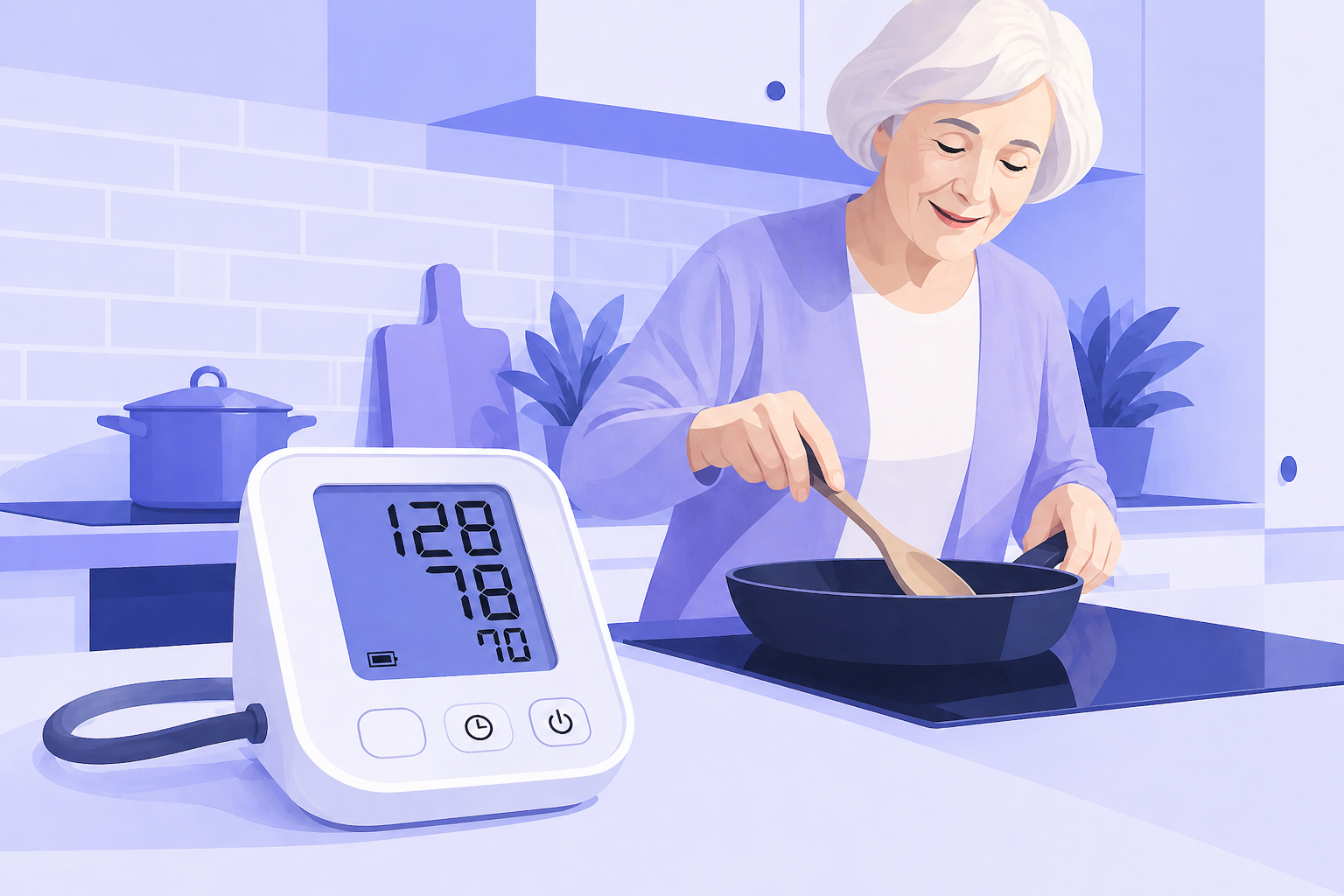
Over the last decade, I’ve helped launch dozens of Remote Patient Monitoring (RPM) programs across health systems, payers, FQHCs, and specialty practices. These ranged from short-term programs like COVID symptom monitoring and hospital-at-home to continuous programs focused on high-risk hospitalization prevention for Medicare Advantage patients.
Some thrived.
Some fizzled.
But they all taught the same lesson:
Success in RPM is not about equipment or coding. It’s about design, intent, and execution.
Here are the factors that consistently make or break an RPM program.
1️⃣ Program Goal
Everything starts here. Test.
When RPM became reimbursable in 2019, many programs launched purely for revenue. Clinics rushed to enroll patients, collect 16 readings per month, check CPT boxes, and bill Medicare.
Most of those programs didn’t last a year.
The programs that scaled had different goals, such as:
- Controlling co-morbid conditions like hypertension, diabetes, COPD, and CHF
- Reducing ER and inpatient admissions through earlier intervention
- Closing quality gaps (HEDIS, STAR, A1c, BP control) and supporting value-based contracts
Across the programs I’ve seen, when outcomes drive design, revenue follows naturally.
Typical results from strong RPM programs:
- 25–50% reduction in ER and inpatient visits within 6 months
- 8–20 mmHg average BP reduction for hypertensive patients
- 60–90 mg/dL average glucose improvement for diabetic patients
- 2–3× higher 6-month patient retention compared to revenue-only programs
Bottom line: if the goal is just billing, retention becomes extremely difficult.
Every other objective should support the program goal.
2️⃣ Population
In RPM, the sicker the patient, the stickier the engagement.
RPM works best when patients feel the benefit. Patients who are enrolled only because of incentives rarely stay long. It becomes expensive to onboard them and even more expensive to retain them.
The toughest group to engage is often younger Medicaid populations. Engagement drops quickly when incentives or structure are unclear. Text reminders and dashboards rarely replace human touchpoints.
The most consistent success comes from Medicare Advantage cohorts, typically ages 65–75, with multiple chronic conditions and established PCP relationships.
These patients value regular contact and are motivated to avoid hospital visits.
In one multi-site program:
- 78% adherence at 9 months among MA patients
- 42% adherence among commercial and Medicaid populations
RPM is not one-size-fits-all. Your population strategy determines both outcomes and ROI.
Another important lesson:
Programs that start with tiny pilot cohorts almost never scale.
You need a large enough funnel to understand:
- Enrollment conversion
- Engagement rates
- Long-term retention
Only then can you model ROI realistically and build a scalable program.
3️⃣ Staffing Model
RPM never works as “just tech.”
Success depends on disciplined workflows and clear ownership across the entire care cycle:
- Consenting
- Enrolling
- Engaging
- Triaging
- Intervening
- Supporting
Staffing models vary:
- In-house nursing teams
- Outsourced monitoring teams
- Hybrid models
- AI-assisted or agentic workflows
But one thing is constant: dedicated clinical stakeholders.
Programs often fail when escalations depend on a busy PCP inbox.
In one group we supported:
- Response times dropped from 72 hours to under 8 hours
- Simply by moving triage from PCP queues to a dedicated care coordinator
This is the point where an RPM program becomes a care program.
4️⃣ Technology
Technology is largely commoditized.
Over the last decade I’ve helped build and launch several RPM platforms. Today there are:
- 100+ FDA-cleared devices
- 50+ RPM vendors
Across app-based, cellular, and hub-based models.
The differentiator is not the platform. It’s adoption and integration.
Interestingly, some of the best outcomes came from standalone RPM systems, not EMR-embedded ones.
Why?
Because EMRs are built for documentation, not dynamic care management.
The right RPM platform should:
- Enable two-way communication and escalation
- Integrate vitals into clinical workflows
- Support configurable protocols and patient-specific thresholds
- Automate repeatable actions like engagement
- Use population management logic to surface deteriorating or stuck patients
- Provide insights into staff workload and utilization
- Support multiple stakeholders: clinicians, care coordinators, ops teams, and executives
- Prioritize patient usability (in many cases SMS programs outperform mobile apps)
Technology enables RPM, but it rarely determines success.
5️⃣ Measurement
You can’t improve what you don’t measure.
And you can’t define success halfway through a program.
Every RPM program follows a natural lifecycle:
Pilot → Expansion → Scale
But deciding whether to expand requires clear success criteria before the pilot begins.
This means aligning stakeholders on:
- What success looks like
- What data must be captured
- How outcomes will be measured
Often baseline metrics or control groups aren’t available on day one. That’s fine. But there must be a commitment to capture and provide this data as the program evolves.
A typical measurement framework includes:
Engagement
- Consent rate
- Enrollment-to-reading conversion
- Daily compliance
Clinical
- A1c trends
- Blood pressure trends
- Weight changes
Utilization
- ER visit rate vs baseline
- Inpatient admissions vs control group
Financial
- CPT utilization
- Care-team efficiency
- ROI per enrolled patient
In one health system we benchmarked, dashboards revealed that:
15% of enrolled patients generated 60% of total ROI
That insight allowed the team to focus resources where impact was highest.
Data becomes the feedback loop that transforms RPM from a pilot into a scalable improvement engine.
The Takeaway
RPM can absolutely work.
But only when it is designed as a care program, not a billing workflow.
It’s not about how many patients you enroll.
It’s about:
- How many lives you improve
- How efficiently your team delivers care
- Whether the program creates sustainable clinical value
If you’re launching or struggling with an RPM program, I’m always curious to hear what’s working, what’s not, and why.